
Prostate Cancer
Understanding Prostate Cancer
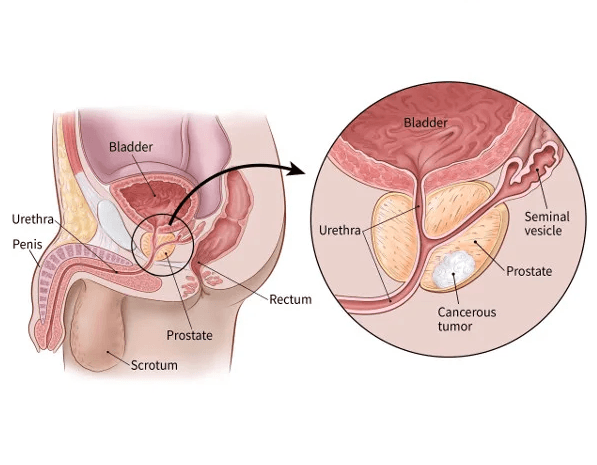
Prostate cancer arises in the prostate gland, a walnut-sized organ responsible for producing part of the seminal fluid. It typically grows slowly, and many early-stage cases are highly treatable. Modern imaging, biopsy techniques, and robotic surgery allow precise diagnosis and treatment with minimal impact on daily life. Understanding the nature of prostate cancer helps patients feel more confident while choosing the right, personalized treatment path.
Early Warning Signs
Most men have no symptoms in early stages, which is exactly why regular screening matters. When symptoms appear, they are often subtle and easy to attribute to age or lifestyle.
Early signs may include:
- Weaker urine flow or taking longer to empty the bladder.
- Getting up more often at night to urinate.
- A feeling that something is different with the urinary pattern, even if mild.
- Discomfort in the lower pelvis or hips that feels vague or dull.
These symptoms don’t automatically mean cancer — but paying attention to your body is the first step to staying healthy.
Causes & Risk Factors
Risk increases with age, family history, high-fat diet, African ancestry, and certain genetic factors. PSA (prostate-specific antigen) can rise in both cancerous and non-cancerous conditions.
Diagnosis
Diagnosis includes PSA blood tests, MRI, and prostate biopsy. Modern imaging helps classify whether the disease is aggressive or slow-growing.
Treatment
For localized cancer, robotic radical prostatectomy is the gold standard. It enables precise removal of the prostate with excellent continence and sexual function preservation. Some patients may also be candidates for active surveillance, radiation, or hormone therapy.
Recovery & Life After Treatment
Hospital stay is usually 1–2 days and most patients resume daily activities within weeks. Continence steadily improves, and PSA monitoring ensures long-term safety.